
May 7, 2026

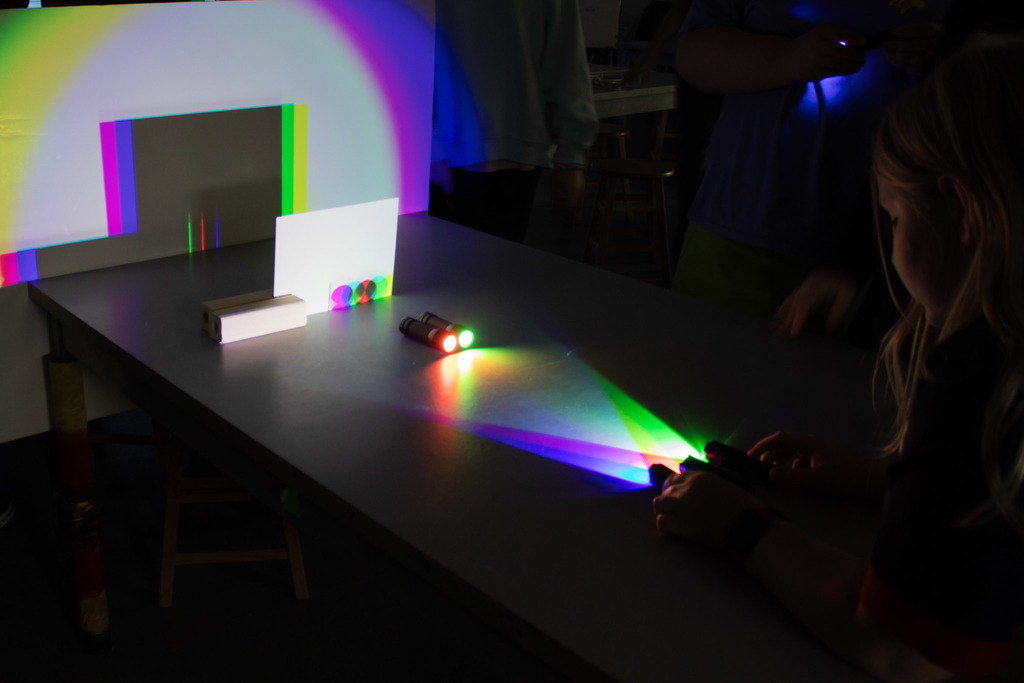
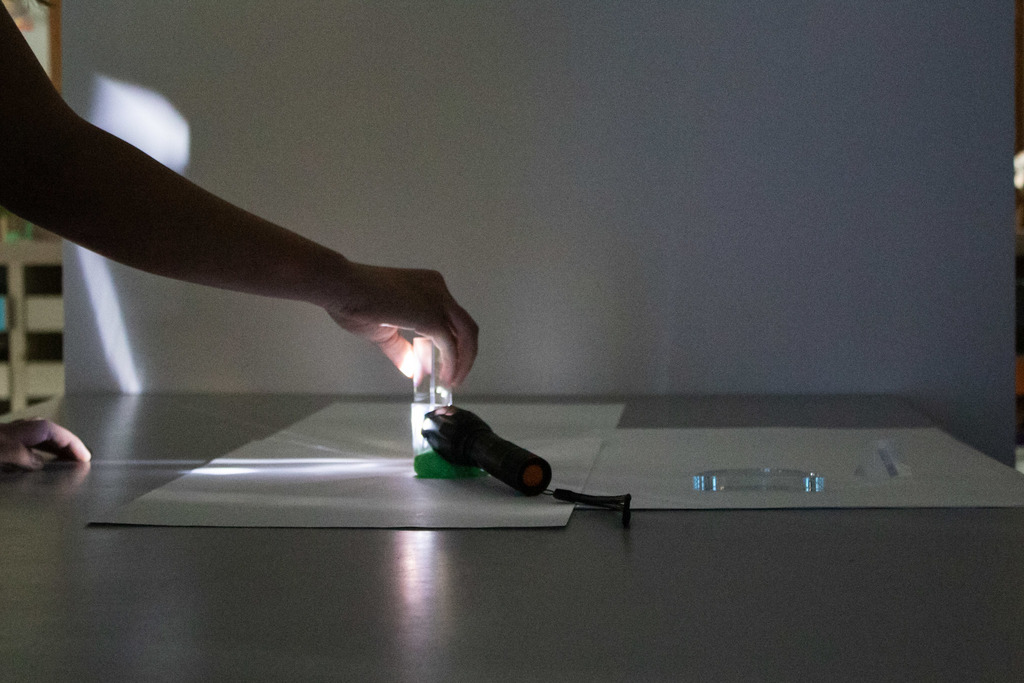
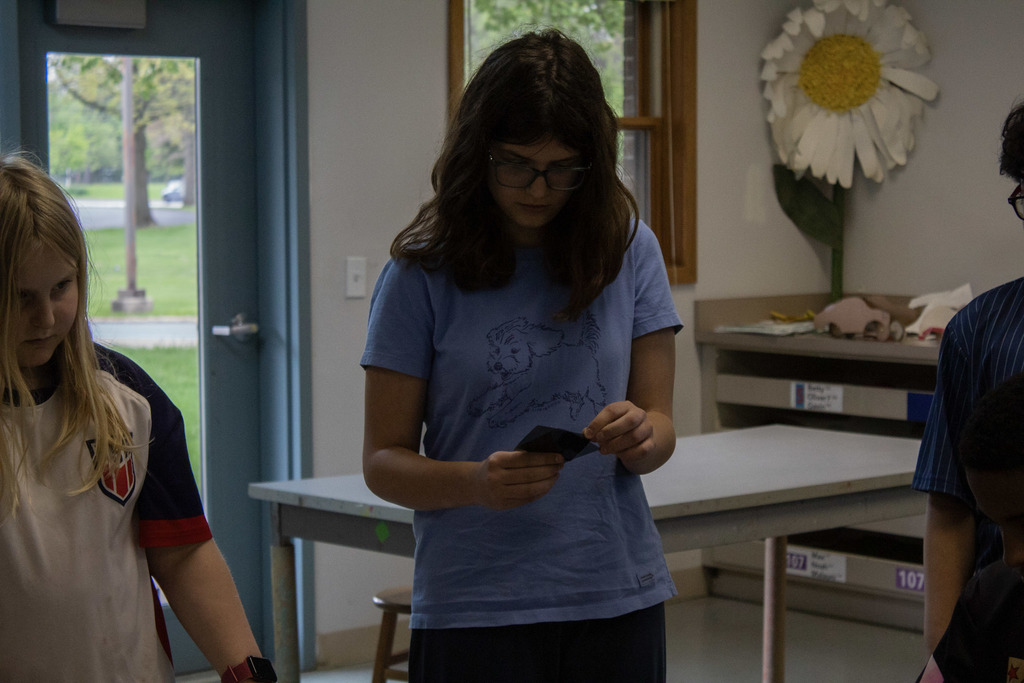
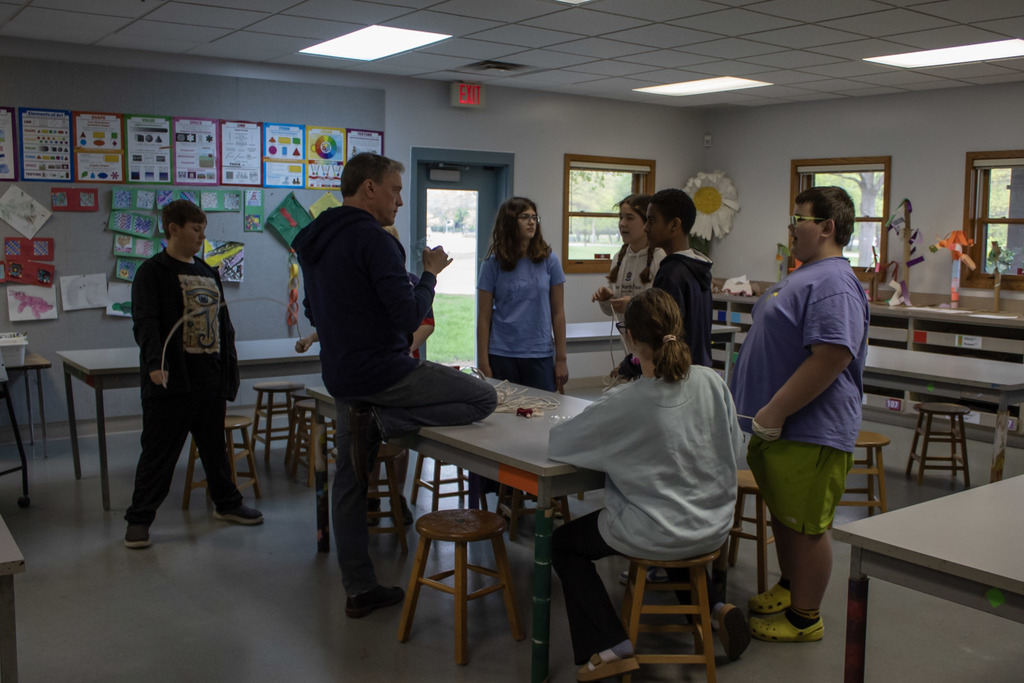
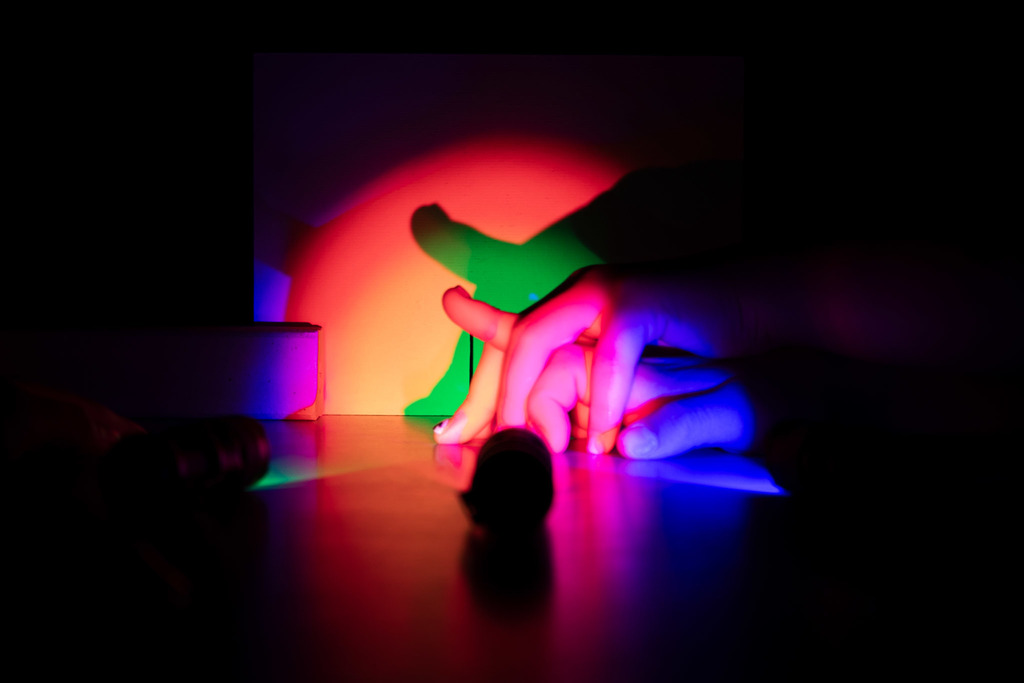
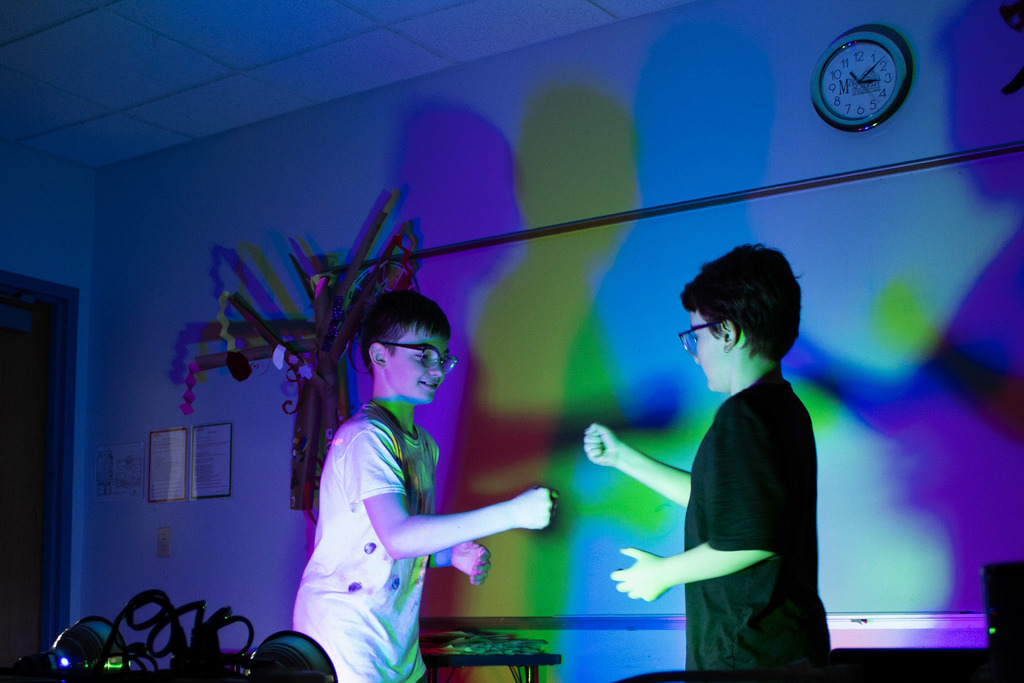
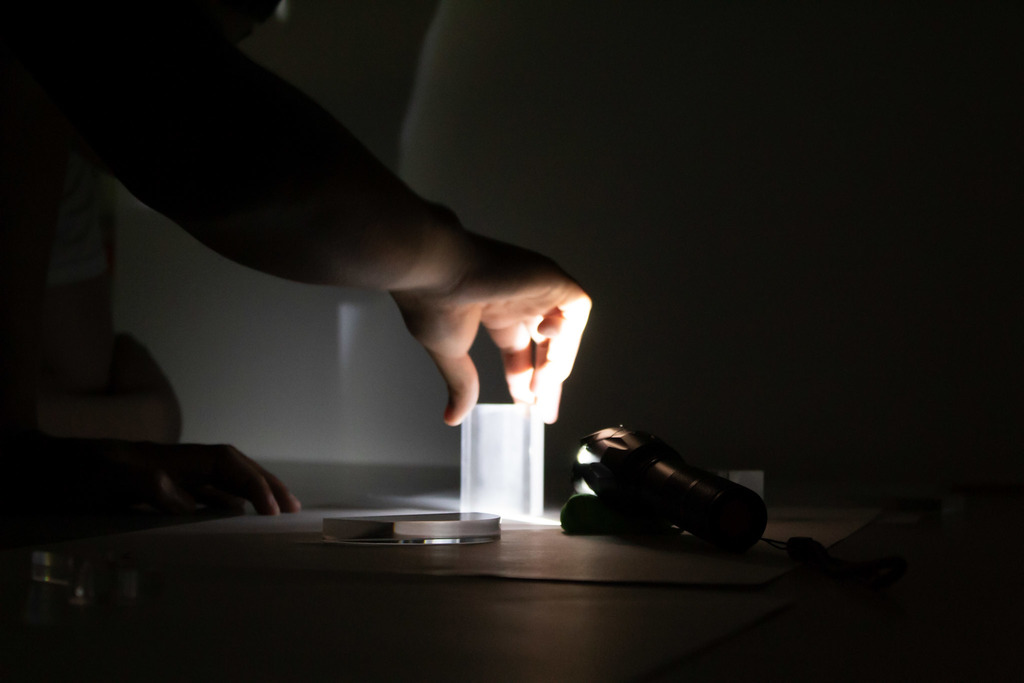
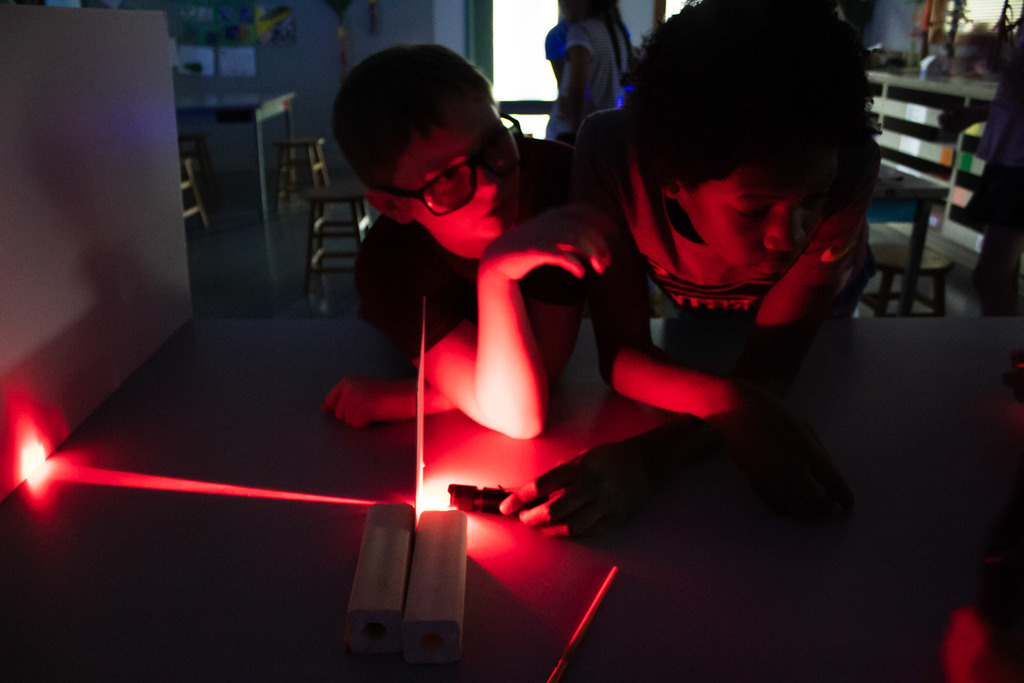
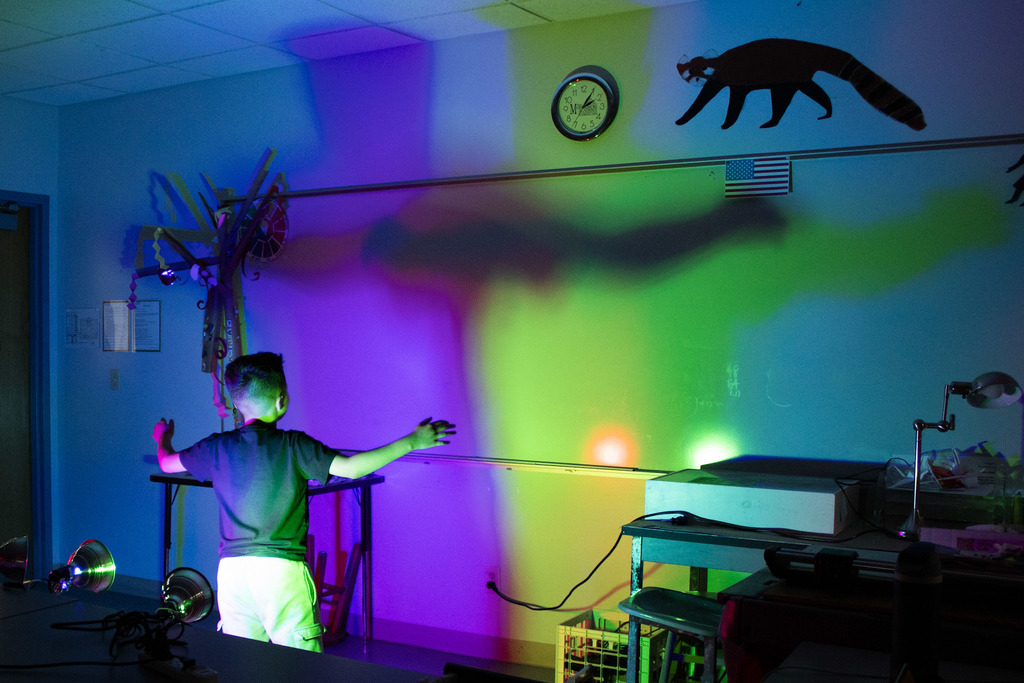
Upper elementary and junior high art students dove into the art and science of color recently, exploring how electromagnetic waves behave and how we perceive light in the visible spectrum. Students took apart a model of the eye and learned how the rods and cones of the retina receive light of specific wavelengths. They used ropes to simulate waves and investigated the relationship between wavelength and energy and the concept of polarization. They then experimented with polarized gels, rotating them to discover that aligned light waves can be completely blocked or allowed to pass, depending on the relative position of the gels. They got to see colorized images demonstrating how pit vipers perceive infrared light and birds and bees perceive ultraviolet wavelengths. Students learned about the differences between additive and subtractive color mixing and then used red, green, and blue flashlights to mix light directly–producing cyan, magenta, and yellow shadows. To wrap things up, students took turns manipulating prisms to reproduce Newton's famous optics experiments, separating white light into the full spectrum and then reassembling it back into white light. All of this sets the stage for an exploration of color theory.