
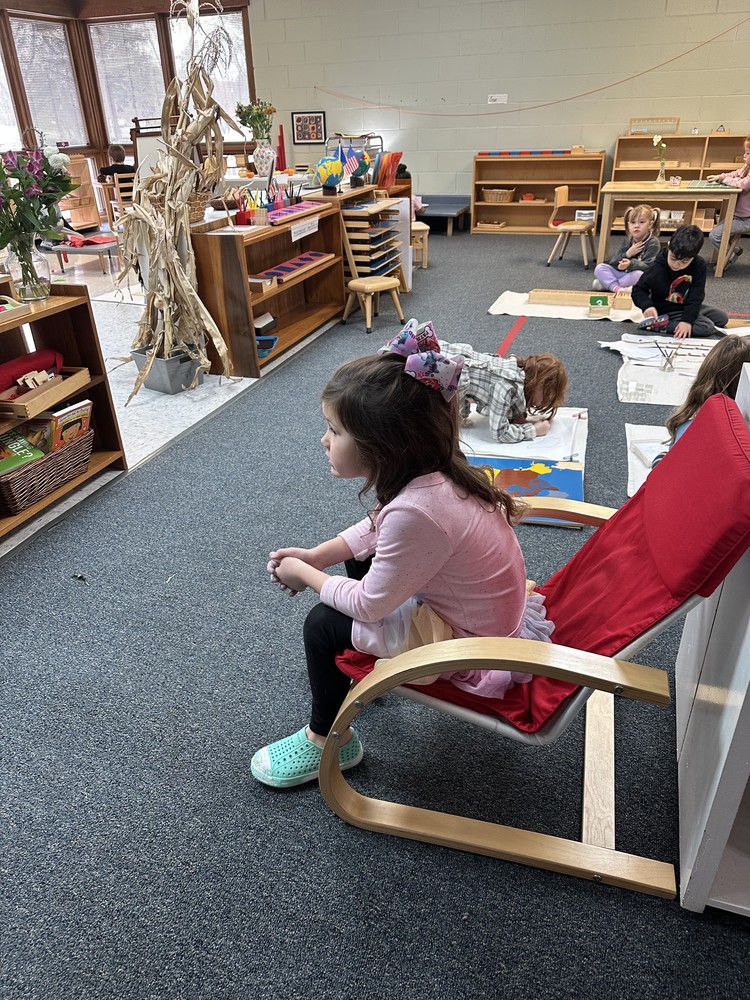
In our Room 2, there are two waiting chairs with a specific purpose.
In a Montessori early childhood environment, a "waiting chair" is a tool for teaching patience, self-regulation, and respect for others. It is not a place for punishment or a "time-out" chair; rather, it is a designated spot where a child can sit to patiently wait their turn for a specific activity or material that is currently in use by another child.
The waiting chair teaches children to:
• Cultivating Patience and Self-Control: The primary purpose is to help children master the life skill of waiting. In a prepared Montessori environment, there is often only one of each material, which naturally creates situations where children must wait for a peer to finish using a desired activity or the snack area.
• Respect for Others' Work Time: The chair reinforces the concept of respecting a classmate's focus and concentration. Children learn they should not interrupt someone who is working, but instead wait patiently for them to finish and put the material away.
• Empowering the Child: The child decides whether to wait or move on to another activity —- they are in charge of their actions.
• Grace and Courtesy: The use of the waiting chair is part of "Grace and Courtesy" lessons, which are explicit lessons in social skills. Children are taught the process of waiting politely, often alongside other lessons like how to carry a chair or how to get a teacher's attention with a gentle hand on the shoulder.
• Observation and Preparation: The waiting time can also become an opportunity for observation. A child waiting for a turn might watch the person using the material, which can help them prepare for their own turn or learn something new about the activity.
The "waiting chair" helps create a calm, respectful, and self-regulating community within the classroom, where children learn valuable social and emotional skills that extend beyond the school environment.